

About - History
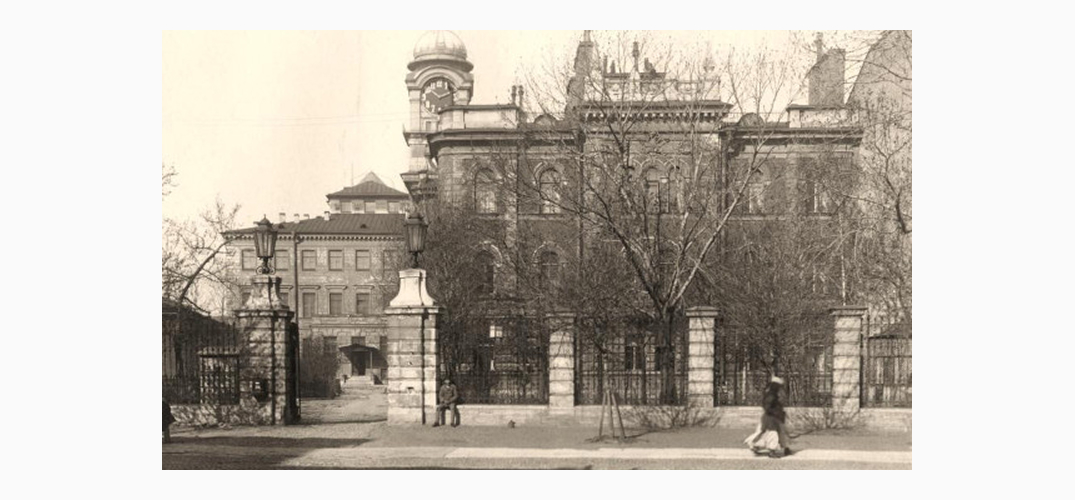
The founding date of the D.I. Mendeleev All-Russian Scientific Research Institute of Metrology (VNIM) is considered to be June 16, 1842, when Russia's first metrological institution, the Depot of Standard Weights and Measures, was established in St. Petersburg by decree of Nicholas I.
In 1842, Nicholas I issued a decree to the Governing Senate—the "Regulation on Weights and Measures." It established a unified system of units, mandatory for use in all parts of the Russian Empire from January 1, 1845, and laid the foundations for the State System for Ensuring the Uniformity of Measurements in Russia. In accordance with the Regulation, a Depot of Standard Weights and Measures was established on the grounds of the Peter and Paul Fortress. The depot remained on the grounds of the Peter and Paul Fortress from 1842 to 1880. The founder of the Depot and its first scientist-custodian was Academician A. Ya. Kupfer. The Depot's responsibilities included storing Russian standard weights and measures (standards), producing and verifying standard measures, and conducting metrological research.
In 1865, after the death of A. Ya. Kupfer, a professor at the Institute of Railway Engineers V.S. Glukhov. According to his idea, in 1879, a special building was built for the Depot at Zabalkansky Prospekt 19 (now Moskovsky, 19). This was caused by the need to improve the conditions for storing standards and the scientific organization of metrological work (this building still serves Russian metrologists).
On November 19, 1892, the great Russian scientist D.I. Mendeleyev. On June 8 (20), 1893, on his initiative, the Depot was transformed into the Main Chamber of Weights and Measures - the scientific metrology center of Russia. By the beginning of the 20th century, a national standard base at the world level was created here, including standards of mass, length, temperature, pressure, time, electrical units, etc.
From the first days of the revolution, the Main Chamber was subordinated to the People's Commissariat of Trade and Industry, and by a decree of the Council of People's Commissars of the RSFSR on October 19, 1920, it was transferred to the Scientific and Technical Department of the Supreme Council of the National Economy. In 1922, a new Regulation on the Main Chamber was adopted, dividing it into two institutes: a metrology institute and a verification institute, united under the single leadership of the president.
From 1922 to 1929, the President of the Main Chamber was D.I. Mendeleev's student and successor, Academician D.P. Konovalov - an outstanding physical chemist.
In 1931, the Main Chamber, whose president at that time was Corresponding Member of the USSR Academy of Sciences Professor N.A. Shatelen, was renamed the All-Union Research Institute of Metrology and Standardization (ВИМС).
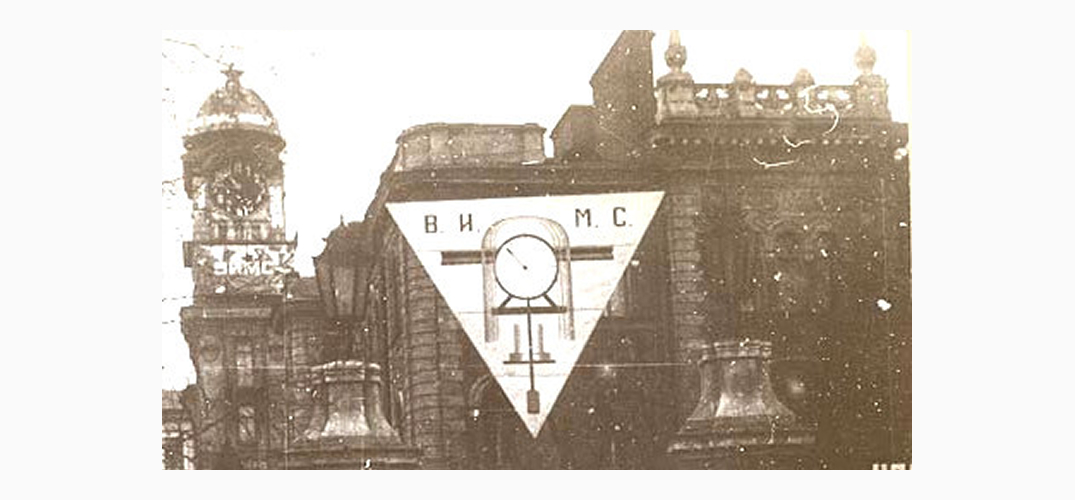
In 1934, VIMS was transformed into the All-Union Scientific Research Institute of Metrology (VNIIM).
In the pre-war years, VNIIM conducted significant scientific work that had a significant impact on the development of new industries. This included research into defining the meter in wavelengths of light, creating standards for magnetic and light units, and developing a set of equipment for calibrating pressure gauges. In 1935, the experimental "Etalon" plant was established within VNIIM's mechanical workshops.
During the Great Patriotic War some of the institute's staff and a number of state standards were evacuated to Sverdlovsk. The laboratories that remained in Leningrad (electrical, manometric, radiological, chemical, etc.) were focused on fulfilling orders from the front and the defense industry. The institute's time service and time standard continued to operate even during the city's siege.
On January 10, 1945, VNIIM was named after the founder of scientific metrology, D.I. Mendeleev.
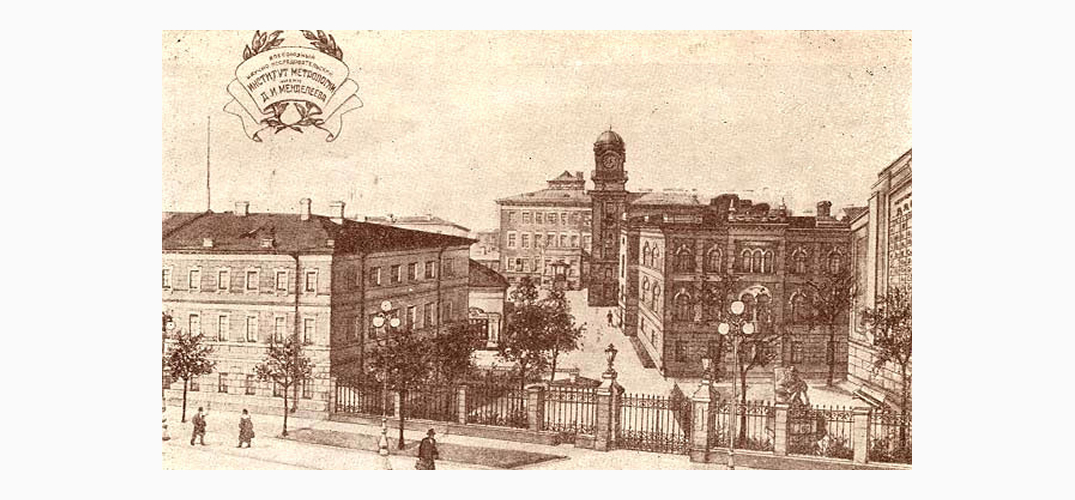
In the post-war years, the institute was headed by such prominent scientists as P.M. Tikhodeev, M.F. Yudin, B.M. Yanovsky, A.K. Kolosov.. Since 1956, for almost twenty years, the permanent director of the institute was the State Prize laureate, Doctor of Technical Sciences V.O. Arutyunov. During this period, the institute's traditional areas of work were significantly expanded and supplemented with fundamentally new areas for metrology: measurement of physical constants, characteristics of thermal processes, parameters of physical fields, and hydrophysical measurements. On the initiative of V.O. Arutyunov, work began at VNIIM on creating a new system of standards for electrical units based on physical constants and the use of stable physical effects. This work was completed by his students and followers by the beginning of 1990 under the supervision of Doctor of Technical Sciences, Professor Yu. V. Tarbeev, who headed VNIIM from 1975 to 1997.
In 1971, VNIIM was awarded the Order of the Red Banner of Labor. An important milestone in the history of the institute was the creation in 1977 of a scientific and production association (NPO "VNIIM" on its basis In 1994, the association was reorganized into the State Enterprise "All-Russian Research Institute of Metrology named after D.I. Mendeleyev" (since 1998 - State Unitary Enterprise, since 2001 - Federal State Unitary Enterprise). Since 1994, the institute has had the status of a State Scientific Center.
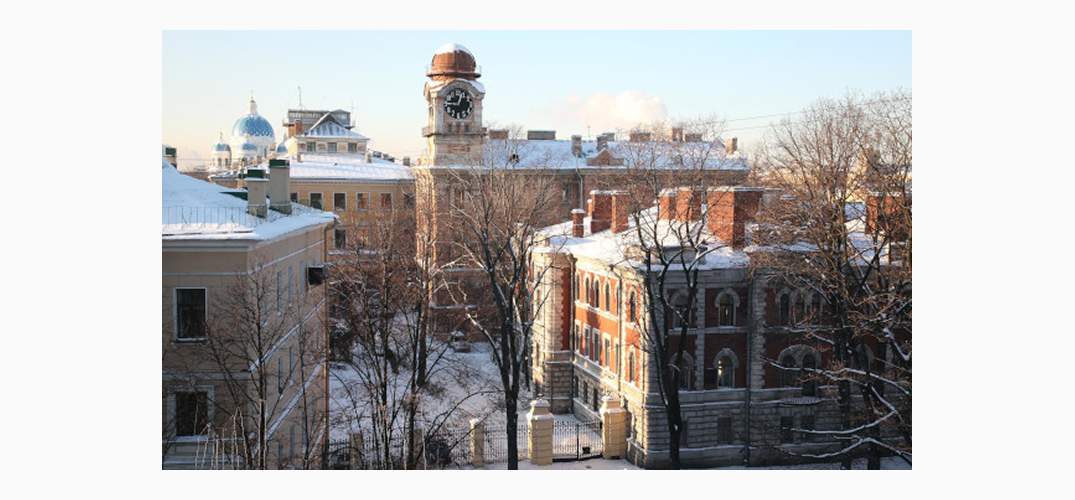
In 1999, VNIIM became a member of the international "Arrangement on the Mutual Recognition of National Measurement Standards and of Calibration and Measurement Certificates Issued by National Metrology Institutes" (CIPM MRA). This is a key document regulating the interaction of national metrology institutes in ensuring the uniformity of measurements on an international scale. It provides for expert evaluation of the measurement capabilities of national measurement standards (based on the results of key comparisons) followed by their registration in the database of the International Bureau of Weights and Measures. Currently, 258 institutes from 98 countries have joined.